Before placing an order in China, get three things straight: who will import the goods, what rules apply to your product in Spain, and what it will really cost to reach your warehouse. Sorting these out before you pay can prevent expensive surprises once the shipment is on its way.
The details vary by product and by the party named as importer. Here are the main points to check before your first order. For your specific shipment, confirm the details with your customs representative or tax adviser. Sources checked in October 2026.
Start by deciding who will appear as the importer on the customs declaration and where the goods will be delivered. The company paying the supplier is not always the importer. Agree this with your customs representative before booking transport; it affects the declaration and some of the paperwork.
The examples here refer to mainland Spain and the Balearic Islands. If the goods are going to the Canary Islands, Ceuta or Melilla, check their specific tax and customs rules first.
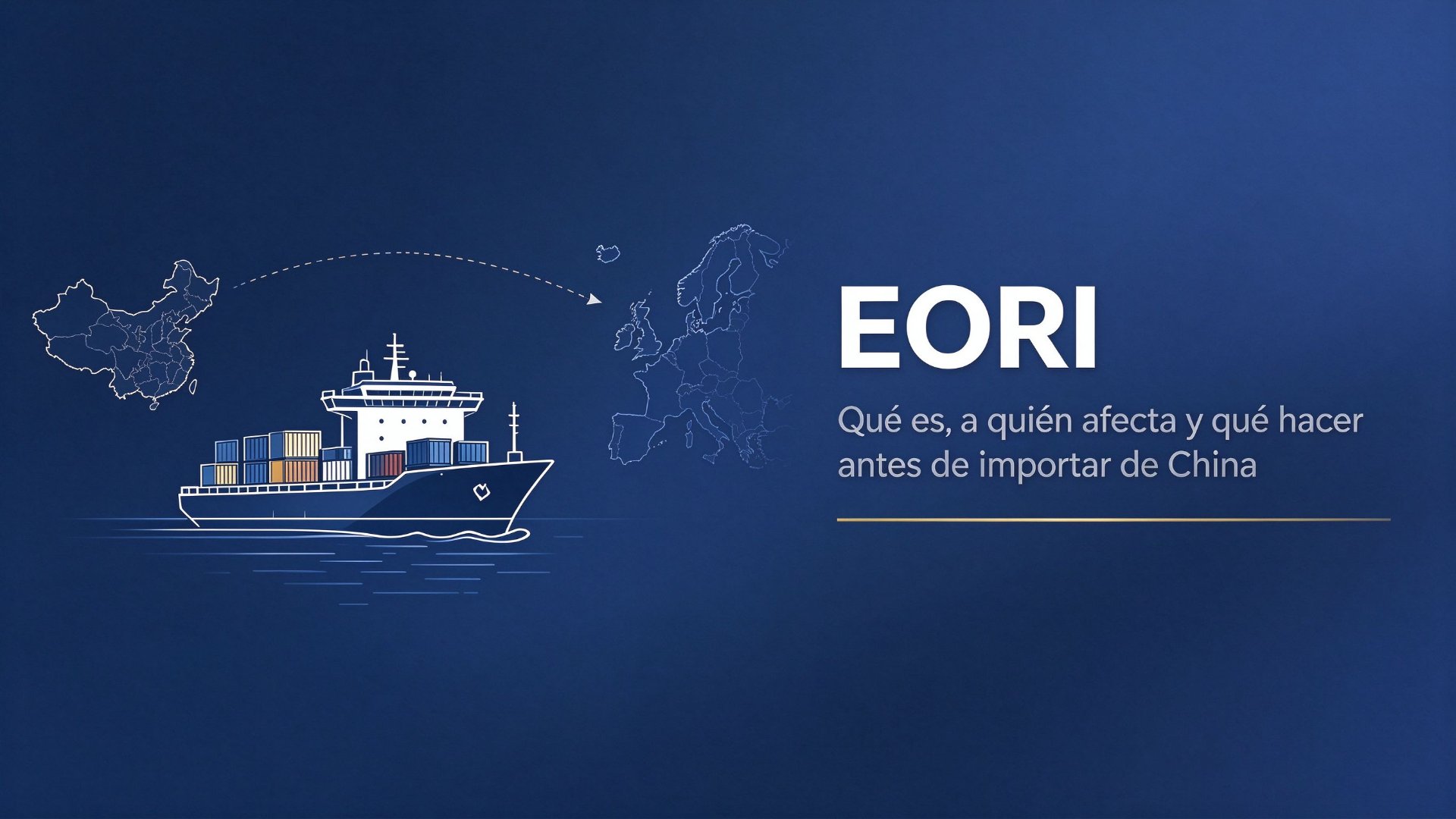
EORI is the identifier used for EU customs operations. If your business is based in Spain, check with the Spanish Tax Agency whether you already have one and how to get it if needed. EORI and VAT/VIES registration are different things; having one does not activate the other.
Import VAT matters too. Customs calculates it on a base that may include the customs value, duties and certain related costs. Whether you can later deduct that VAT depends on your tax situation and how you use the goods. Ask your adviser before working it into your margin.
Sources: Spanish Tax Agency: EORI in Spain · European Commission: EORI number · Spanish Tax Agency: customs value and duty base · Spanish Tax Agency: import VAT taxable amount
Most commercial shipments need a set of basic documents. The exact list depends on the goods and transport, but you will usually need:
Take a moment to check that the details match. “Accessories” does not say much about what you are importing, and an invoice with different quantities from the packing list can lead to questions and delays. Your customs representative can tell you if the product needs anything else.
Source: European Commission: customs controls and commercial documents
The duty is not based on the product name you use in your shop. It depends on its customs classification and the details of the transaction. Start with the Access2Markets search tool. If you are unsure which code fits, ask your customs representative to confirm it.
When you work out the cost, add more than the factory price and freight: include insurance where applicable, duty, import VAT, clearance, any inspection and final delivery. That gives you a more useful estimate of the cost at your warehouse. Duty and VAT depend on the product, so avoid applying one blanket rate to the whole order.
Before paying for production, find out which rules apply to the product. CE marking, for example, is required for some categories and does not apply to others. When it is required, printing the symbol is not enough: the right conformity process and supporting documents must be in place. Importers have checks of their own to make.
If you sell the product under your own brand, the rules may treat you as the manufacturer and give you additional responsibilities. Ask for the documents before approving production and make sure they cover the exact model you plan to sell.
Depending on the product, you may also need to consider safety, labelling, chemicals, packaging or batteries. The European Commission explains importer responsibilities. A sourcing partner can help collect and organise documents, but a product specialist should confirm which rules apply to your goods.
Sources: European Commission: CE marking · European Commission: importer and distributor obligations · Your Europe: general product compliance
Give every supplier the same brief: material, dimensions, finish, packaging, labelling, quantity and delivery date. Ask for a sample and keep a record of the one you approved. It gives you something specific to compare against during production.
MOQ (minimum order quantity) depends on the product and how much customisation you want. A ready-made item may be available in smaller quantities; custom packaging or a new design can raise the minimum. Keep MOQ separate from the deposit: one is the minimum quantity, the other is a payment term.
You can also arrange a pre-shipment sample inspection to check agreed points against the approved sample and specifications. Decide in advance what will be checked and how the results will be reported.
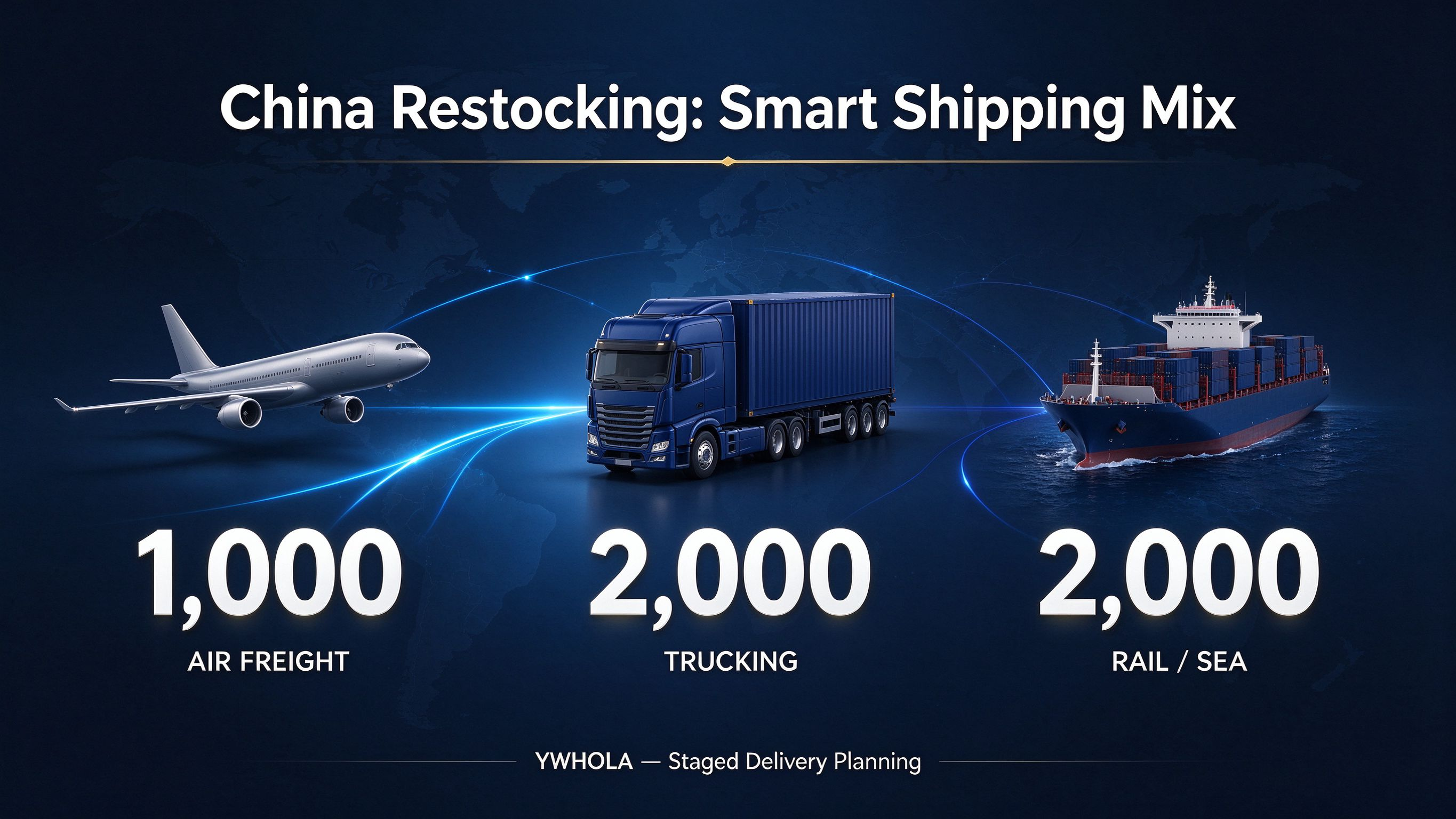
The fastest option is not always the right one. Compare air, road, rail and sea based on volume, when you need the goods and your budget. Check the quote line by line: does it include collection, customs clearance, taxes and final delivery? Also confirm who will be the importer and who handles each step.
For some shipments to Spain, YWHOLA uses these indicative transit estimates: 15–20 days by air, 35–50 days by road, and 45–65 days by rail or sea. Routes and service levels affect timing, so ask for a current estimate for your destination. These times may not include factory preparation.
At YWHOLA, we find and compare suppliers, coordinate samples and arrange quality checks in China. To discuss a project, tell us what you are looking for, the approximate quantity, destination and whether you need custom branding or packaging.
We can also help gather information for your customs representative. EORI applications, VAT registration and customs classification should be handled with the professionals responsible for those matters.
Sources reviewed: October 2026. This is general information; verify current requirements and rates for each transaction.